IELTS 2026: Upcoming Changes You Need to Know


If you are planning to take the IELTS in 2026, this matters to you.
The exam is not becoming “harder,” but it is becoming stricter and less predictable. The Band scale (0–9) stays the same, but how your skills are evaluated—and what examiners expect from you—has evolved significantly.
Understanding these changes can be the difference between staying stuck at Band 6.5 and finally reaching Band 7.0 or higher.
Below is what you, as a test-taker, need to understand.
1. You Don’t Have to Retake the Whole Exam Anymore
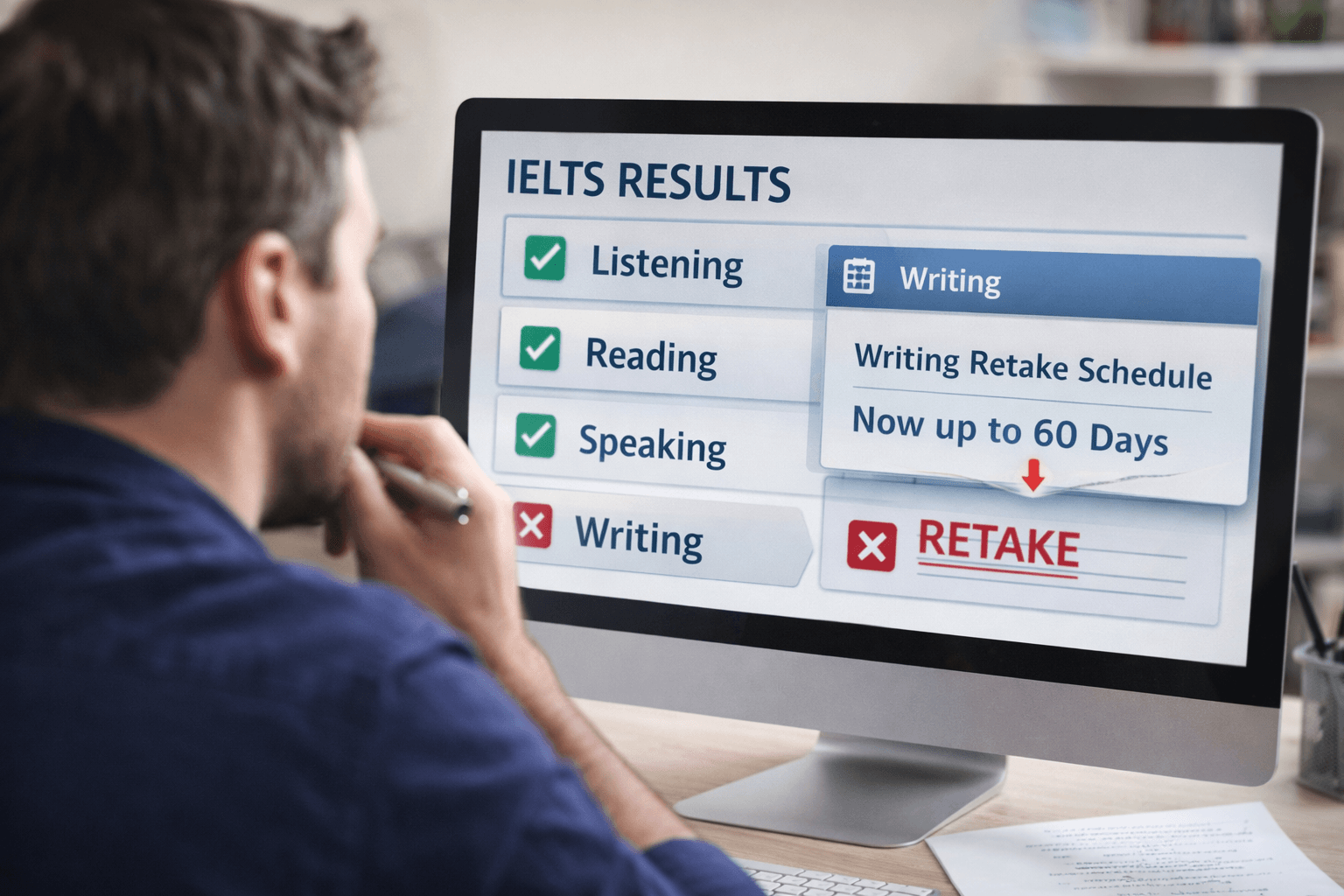
(One Skill Retake) Until recently, one weak section meant repeating the entire test. That has changed.
What this means for you:
😃
If you miss your target band in one skill only (for example, Writing), you can now retake just that section.
You have up to 60 days after your original test. This applies only to computer-delivered IELTS.
This is already active in many test centers and is becoming standard practice for 2026.
🔑 Why this matters:
You can now prepare more strategically and reduce risk—but only if you understand which skill actually needs fixing.
*** Source: https://takeielts.britishcouncil.org/take-ielts/one-skill-retake
2. Writing in 2026: Memorized Templates Will Hurt You
This is the biggest change you need to take seriously.
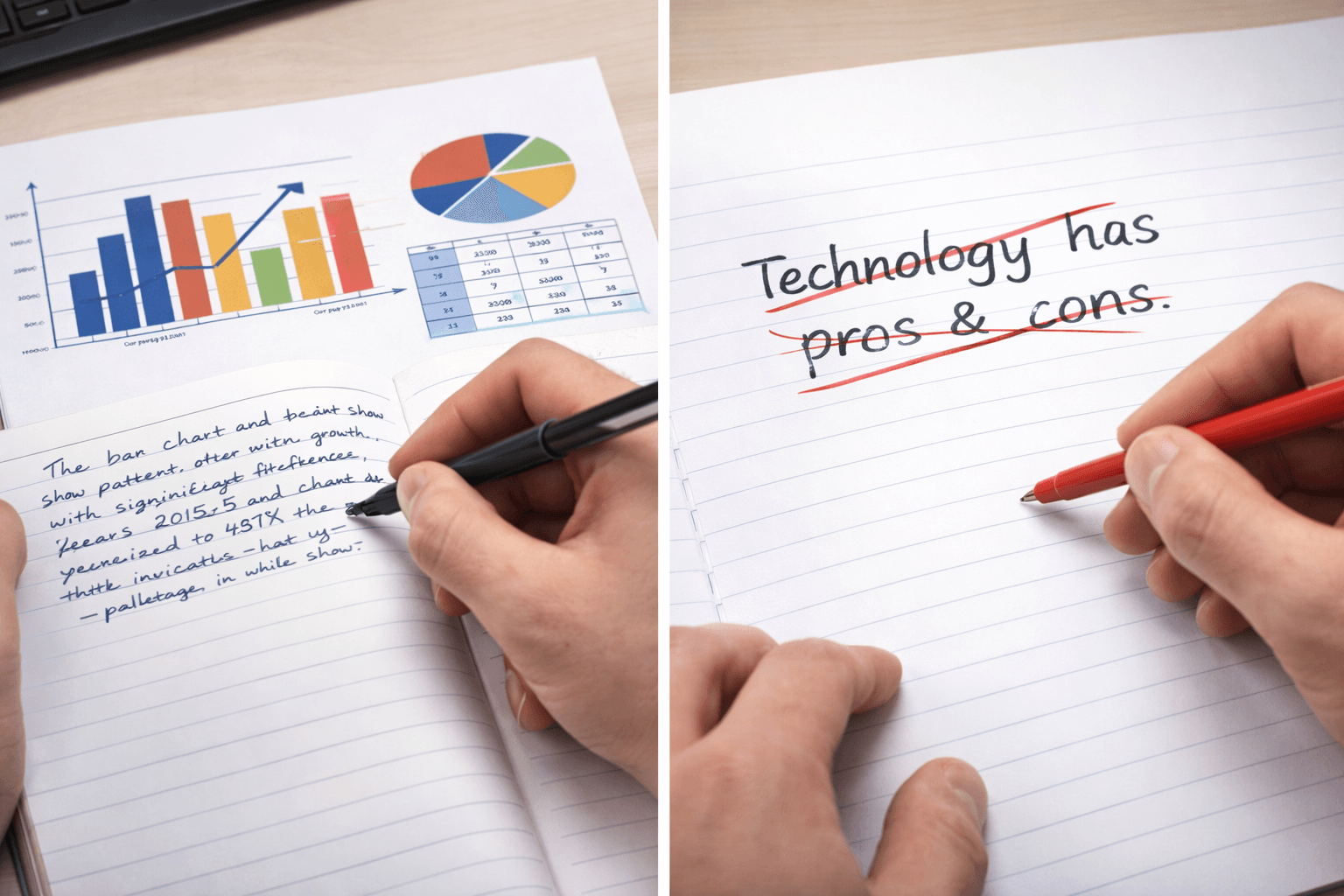
Task 1 (Academic): Expect Mixed Data
Simple line graphs are becoming less common. Instead, you should expect:
- Charts combined with tables
- Conflicting data that must be compared and synthesized
- Less description, more interpretation
If you only practice “standard” Task 1 formats, you are underprepared.
Task 2 (Essay): Generic Answers = Lower Scores Examiners are now instructed not to reward memorized structures.
What this means for you:
- Questions are more specific and nuanced
- Writing a generic “technology has pros and cons” essay will lower your score
- You must directly address what the question is really asking Key shift:
Clarity of argument > fancy vocabulary
Logic > memorized structure
3. Reading & Listening: You Can’t “Hack” the Test Anymore
Many candidates relied on shortcuts. In 2026, those shortcuts are disappearing.
Reading: More Logic, Less Guessing
You will see:
- Fewer Matching Headings
- More Matching Sentence Endings
- Greater emphasis on grammatical and logical connections
Skimming alone is no longer enough. You must actually understand how ideas connect.
Listening: Less Predictable Structure
You can no longer rely on:
- “Maps always come in Section 2”
- “Tasks follow a fixed order”
Expect:
- Task types to appear earlier or later than usual
- Faster switches between task formats
What this tests: real listening, not memorization of patterns.

4. Listening Accents & Interface: More Real-World English
IELTS is aligning more closely with global English.
What you should expect:
- More non-native but fluent accents (European, Indian, East Asian speakers)
- Clearer digital interfaces for map-labeling tasks
- Visual orientation aids in computer-based tests
This reflects how English is actually used in international workplaces.
5. Speaking: More Video Call Speaking (VCS)
Many centers are moving to Video Call Speaking.
What this means for you:
- You still speak to a real human examiner
- The examiner appears on a screen
- Part 2 prompts are shown digitally, not on paper
If you are uncomfortable speaking naturally through a screen, this can affect your performance.
Final Verdict for You as a Student → IELTS 2026 is not harder, but it is:
- stricter
- less forgiving of shortcuts
- more focused on real language ability
What no longer works:
- Memorized essays
- Template-based answers
- Guessing through skimming
What does work:
- Clear structure
- Flexible thinking
- Real feedback
- Targeted practice based on your weaknesses
Your Next Step
If you are preparing for IELTS in 2026, you should:
- Practice mixed charts in Writing Task 1
- Stop memorizing essay templates
- Train Reading through sentence logic, not just keywords
- Prepare for real listening conditions and varied accents
Strategy matters more than volume of practice.
From your coach:
If you are not currently preparing for IELTS with professional guidance and would like support, you can reach out via WhatsApp by clicking the button on the right, and I’ll be happy to help you plan your preparation more strategically.
And if we are already working together, I hope this article helps you better understand what to focus on as you prepare for the exam .

About the author
Bastian Agudelo is a language coach specialized in English and French, working with professionals, students, and medical doctors who aim to study, work, migrate abroad, or advance confidently in their international careers. His approach focuses on clarity, structure, and real-world communication, helping learners perform effectively in professional and international assessment contexts.